
Divi 4 is the fourth major version of Divi, the WordPress theme and visual page builder from Elegant Themes. It arrived in 2019 with the Theme Builder, which lets you design headers, footers, blog posts, product pages, and 404 pages visually instead of editing theme files. Divi 5 is now the current generation, yet Divi 4 still powers plenty of live sites, and for many of them staying put is the right call.
This guide covers what Divi 4 includes, how to build a site with it, how it differs from Divi 5, and how to decide between staying and upgrading. You also get a safe upgrade routine, fixes for common Divi 4 problems, and straight answers on downloads, licensing, and version numbers.
We work with Divi layouts, hero sections, and child themes every day at DiviHat. The advice here comes from building and maintaining real Divi sites, not from a changelog.
Why Divi 4 still matters
Divi 4 still matters because most existing Divi sites, tutorials, and third-party add-ons were built on it, and a stable site you understand beats a new version you have not tested. Divi 5 is the future of the platform. Divi 4 is the present for a lot of working websites.
What people use Divi 4 for
You can build a complete WordPress site with Divi without writing code. Freelancers use it for client websites, agencies use it for repeatable builds, and small business owners use it to manage their own pages. Typical projects include business sites, portfolios, blogs, landing pages, and WooCommerce stores.
The builder runs either as the Divi Theme, which bundles the builder and the theme, or as the Divi Builder plugin on top of another theme. Either way, the logic is the same. You stack sections, split them into rows and columns, and fill them with modules such as text, images, buttons, sliders, and forms. Learn that structure once and every page follows it.
What the 4.0 release changed
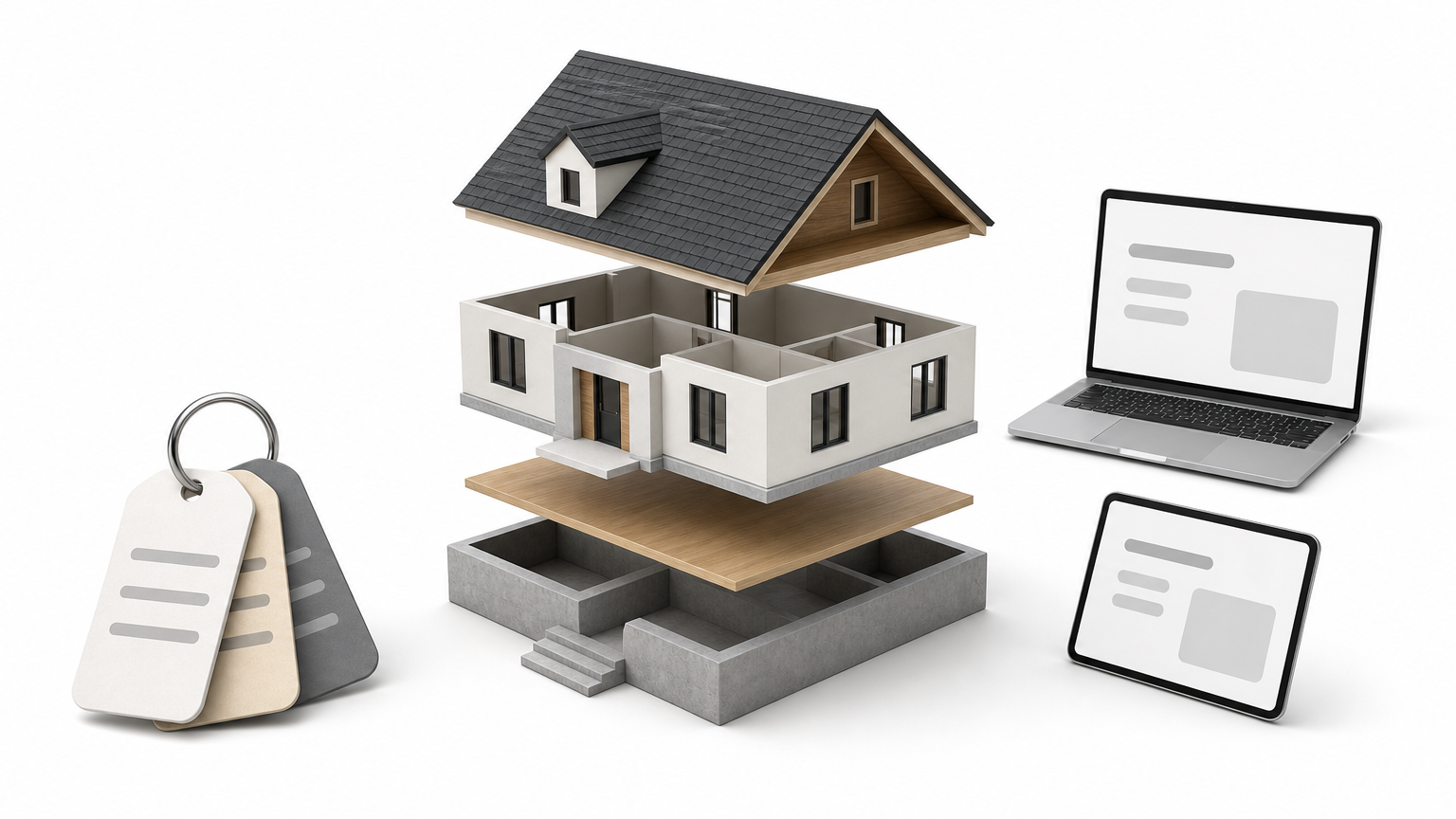
Before 4.0, the builder controlled only the content area of a page or post. The header, footer, and blog layout came from the theme. Version 4.0 added the Theme Builder, which extends the builder to headers, footers, category pages, product templates, blog post templates, and 404 pages.
Each template has a header, body, and footer area that you design with the same modules. Dynamic Content makes this work, because it pulls each post’s title, featured image, or body into the design automatically. Edit one template and every post that uses it changes.
How Divi 4 differs from a typical theme
A typical theme gives you a fixed layout plus a few customizer options. Divi 4 gives you a design system instead, and that is both its strength and its cost. You get far more control, but your content is stored as shortcodes. If you ever switch away from Divi, those shortcodes stay in your posts as clutter.
For most people building client sites, the tradeoff is fine. A page that takes hours to assemble in a bare theme takes minutes with a premade layout. Just know the cost before you commit, and treat a Divi build as a long-term decision.
Why the version question is still open
Elegant Themes rebuilt Divi from the ground up for version 5, and new features now land there. It also said Divi 4 stays supported during the transition. That leaves you with a real choice rather than a forced move.
Two questions decide it: do you need Divi 5 features, and are your plugins ready? The rest of this guide helps you answer both.
A working Divi 4 site is not broken just because a newer version exists.
How to build a website with Divi 4
To build a site with Divi 4, install the theme, activate your license, create pages in the Visual Builder, and then use the Theme Builder to control headers, footers, and templates across the whole site. The order matters, because templates set the frame that your pages sit inside.
Set up the theme and your license
Start with a clean WordPress install on hosting that gives the builder enough memory. Upload the theme file through Appearance > Themes > Add New, activate it, and enter your Elegant Themes username and API key under Divi > Theme Options > Updates. Without that key, you will not receive updates.
- Install and activate the Divi theme.
- Add your username and API key so updates work.
- Create a child theme if you plan to add custom PHP or functions, so updates never overwrite your changes.
- Set your logo, colors, and fonts in the theme customizer before you build pages.
Build your first page in the Visual Builder
Create a new page and click Use Divi Builder. Divi offers three starting points: Build From Scratch, Choose a Premade Layout, and Clone Existing Page. Pick one, then click Use Visual Builder to edit directly on the live page.
Add a section, choose a row layout, and drop in modules. Click any module to change its content, design, and advanced settings. The responsive icons let you set different values for desktop, tablet, and phone, so check each view before you publish. Beginners get faster results from a premade layout than from a blank page, because they only replace text, images, and colors.
Use the Theme Builder for site-wide templates
The Theme Builder is where Divi 4 stops being a page builder and becomes a full site builder. Follow these steps for a first template:
- Open Divi > Theme Builder and choose Add New Template.
- Under Use On, pick the target, such as All Posts, a category, or one specific page. Use Exclude From to carve out exceptions.
- Add a custom header, body, or footer and design it with the same modules you use on pages.
- Insert Dynamic Content into modules so each post shows its own title, image, and text.
- Save the Theme Builder, then open a post to check the result.
Build the global header and footer first, then add narrower templates on top. One trap catches many people. If you create a custom body template and it lacks a sidebar, sidebars disappear from those posts until you add the Sidebar module back into the template. If you never create a Theme Builder template, updating Divi changes nothing about your layout.
Build the global header and footer first, then add narrower templates on top.
Build product templates for WooCommerce
Divi 4 includes WooCommerce modules that you place inside a body template. Instead of designing product pages one by one, you create one site-wide product template and fill it with modules for the title, price, images, description, and add-to-cart button.
Each product then populates the template from its own data. Enter the price and description in WooCommerce as usual, and the design follows. You can also export a template set as a pack, which makes it easy to reuse a store structure on another site.
What Divi 4 includes: features at a glance
Divi 4 includes a Visual Builder, a Theme Builder, Dynamic Content, WooCommerce modules, a reusable Library, presets, and split testing, all under one license. That bundle is the reason it became one of the most popular WordPress themes.
Core features in one table
| Feature | What it does |
|---|---|
| Visual Builder | Edit on the live page and see changes instantly |
| Backend Builder | Build with a structured editor inside the WordPress page screen |
| Theme Builder | Create custom headers, footers, and templates for any part of the site |
| Dynamic Content | Pull titles, images, and custom fields into modules |
| WooCommerce modules | Design product pages and store templates |
| Divi Library | Save, reuse, import, and export sections, rows, and layouts |
| Presets | Save module styling and apply it to other modules |
| Split testing | Compare page variants and track which one wins |
| Role Editor | Limit what each WordPress user role can do in the builder |
Reuse and consistency tools
The Divi Library is the feature that saves the most time on repeat work. Save any section, row, or module, then drop it into other pages. Mark an item as global and a single edit updates every page that uses it. The same Library imports and exports layout files, which is how premade layouts reach your site.
Presets cover styling. Style one button the way you want, save it as a preset, and apply it to every other button. A consistent button, heading, and card style across a site comes from presets and global items, not from copying settings by hand. When you import a layout from any vendor, confirm which Divi version it was built for before you buy.
Marketing and store features
Divi 4 ships with modules for contact forms, email opt-ins, and calls to action, so a basic lead page needs no extra plugin. Split testing is the less obvious gem. You pick a page element, create a variant, set a goal such as a click or a form submission, and let Divi track which version converts.
For stores, the WooCommerce modules work together with the Theme Builder, as covered above. Together they cover most small shops without a separate store design plugin.
Divi 4 packs a builder, a template system, and a testing tool into one license.
Divi 4 vs Divi 5: what actually differs
The main difference is the foundation. Divi 5 is a ground-up rebuild aimed at speed and flexibility, while Divi 4 keeps the older PHP and shortcode architecture that has years of polish and plugin support behind it.
Side-by-side comparison
| Area | Divi 4 | Divi 5 |
|---|---|---|
| Foundation | PHP, server-rendered builder | Rebuilt with a React-based front end |
| Content storage | Shortcodes | Block-style markup |
| Layout | Sections, rows, and columns | Same structure plus Flexbox-based layout controls |
| Design system | Presets for modules | Design variables and option group presets |
| Speed | Can feel heavy on large pages | Leaner code and a faster builder |
| Add-on support | Broadest, with years of third-party modules | Growing, and some add-ons need updates |
| Track record | Mature, with years of fixes | Newer, with frequent feature releases |
New AI features such as Divi AI Agents, a command interface that takes actions inside the builder, are announced for Divi 5. Divi 5 has also received new modules, including charts, Gravity Forms, Imagely, and a payment button.
Is Divi 5 better than Divi 4?
On architecture, performance, and design tooling, Divi 5 is better. For an existing live site, that does not make it automatically the right move. A site that earns money and runs without errors on Divi 4 gains little from a migration that takes testing time.
For a new build, the answer is simpler. Divi 5 is the version receiving the new work, so a site started there never needs a second migration.
Is Divi 5 officially released?
Yes. Divi 5 is out and gets active feature releases. That also means the platform’s momentum is on Divi 5’s side. Divi 4 is the mature, stable branch, and Elegant Themes has said it will keep supporting it through the transition.
What carries over from Divi 4
Your skills carry over almost completely. The interface is familiar enough that Divi 4 users find their way quickly. Divi 4 layouts continue to work in Divi 5, so you do not lose pages when you move.

The part that needs attention is third-party code. Because Divi 5 introduces a new API, add-ons and custom modules built for Divi 4 may need an update before they behave the same way.
Divi 5 wins on foundation, and Divi 4 wins on proven stability.
Should you stay on Divi 4 or upgrade to Divi 5?
Stay on Divi 4 when your site is stable and depends on add-ons that are not ready, and move to Divi 5 when you want better performance, newer features, or you are starting a fresh build. For new projects, start on Divi 5.
Reasons to stay on Divi 4 for now
Staying is a legitimate strategy, not procrastination. It makes sense in these cases:
- The site works, earns revenue, and nobody is complaining about speed.
- You rely on third-party modules or integrations, such as custom-field or multilingual plugins, that have not confirmed Divi 5 support.
- You have no time to test a migration properly.
- A client site has no maintenance budget, and a change would need unpaid support.
If you stay, keep Divi on the latest 4.x release and keep WordPress and PHP current. Most Divi 4 trouble comes from old versions meeting new plugins.
Reasons to move to Divi 5
Move when the benefits are concrete. Slow editing on long pages, a wish for design variables and Flexbox layouts, or a need for the newer modules and AI tools are all solid reasons. So is simple long-term planning. Every year on Divi 4 adds more pages you will eventually convert.
Agencies that manage many sites often migrate one low-risk site first, measure the result, and then schedule the rest. That gives you a tested routine before client money is on the line.
A rule for new projects
Start every new site on Divi 5. You avoid a future migration, and you can use current layouts from the start. Our Divi page layouts and Divi hero sections are built for Divi 5, so they fit that path. If you stay on Divi 4, check a layout’s compatibility before you buy it.
Start new builds on Divi 5, and move old sites only when you have time to test them.
How to upgrade from Divi 4 to Divi 5 safely
Upgrade by backing up the site, cloning it to a staging copy, updating and converting there, testing everything that matters, and only then repeating the process on the live site. Never run the first upgrade on a live site.
Prepare before you touch anything
Preparation prevents nearly every upgrade disaster. Do these things first:
- Take a full backup of files and database, and confirm you can restore it.
- Create a staging copy of the site on your host.
- List every plugin, especially those that add Divi modules or work with custom post types, forms, multilingual content, or caching.
- Check each add-on’s documentation for Divi 5 support.
- Update WordPress and PHP to versions your host and Elegant Themes both support.
This inventory is the most valuable step. A single unsupported add-on is the usual reason a migration stalls.
Run the upgrade on staging
Update the theme the same way you update any Divi release, then follow Elegant Themes’ current migration documentation for converting your content, because the exact steps can change between releases. A sensible order looks like this:
- Update Divi on the staging site only.
- Open your most important pages in the builder and let Divi convert them.
- Open the Theme Builder and check each template, since global headers and footers affect every page.
- Update or replace any add-ons that flag problems.
- Fix visual differences one at a time, and write them down.
Convert a handful of key pages first, such as the homepage, a post, and a product page. If those survive, the rest usually do.
Test before you go live
Run a checklist on staging with a fresh browser session:
- Header, footer, and menus on desktop and mobile
- Contact forms and email delivery
- WooCommerce cart and checkout, if you run a store
- Custom CSS and custom code snippets
- Translated pages, if you use a multilingual plugin
- Page speed before and after, using the same testing tool both times
When everything passes, repeat the steps on the live site during a quiet traffic window, with a fresh backup taken just before. Keep the staging copy until you are sure nothing is broken.
Test every template on staging, because one broken header or footer breaks the entire site.
Common Divi 4 problems and how to fix them
Most Divi 4 problems trace back to plugin conflicts, caching, or server limits, and the quickest diagnosis is to switch off other plugins one at a time. The table below maps the usual symptoms to a first fix.
Symptoms, causes, and first fixes
| Symptom | Likely cause | First fix |
|---|---|---|
| Builder will not load or hangs | Caching or lazy-load plugin interfering, or low server limits | Disable caching and lazy loading for the builder, then raise memory and execution time |
| Archive pages repeat the same post | Loop conflict with a custom-post-type plugin such as Toolset | Rebuild the archive template and update both plugins |
| Translated pages return "page not found" | Conflict with a multilingual plugin such as WPML | Update both plugins and check their compatibility notes |
| Sidebars vanished | Custom body template with no sidebar | Add the Sidebar module to the template |
| Visual Builder times out | Host limits too tight | Raise PHP limits or ask your host |
| Site feels slow | Heavy pages and unoptimized images | Trim modules, compress images, and review Divi’s performance options |
Plugin conflicts and update timing
Many of these conflicts surfaced right after the 4.0 release and were addressed in later point releases. That is why running the latest 4.x version matters. If a plugin still clashes with Divi 4, update both sides, test on staging, and contact the plugin’s support team with your version numbers.
Slow builder and slow pages
Divi 4 can feel heavy on large pages. Start with the basics: a server with a memory limit of at least 256M, current PHP, compressed images, and a caching setup that excludes the builder from caching. Then open the performance options in Theme Options and enable the ones your site can handle. If a page still drags, split long layouts into fewer sections, because every extra module adds weight.
Fix the server and caching first, because they cause more Divi 4 trouble than the builder does.
Divi 4 downloads, licensing, and version numbers
There is no legitimate free download of Divi 4. Divi is a paid product from Elegant Themes, sold through a membership, and you need that license for updates and support. Anything that claims otherwise is a trap.
Is there a free Divi 4 download?
Searches for a free Divi 4 download lead to "nulled" copies, which are pirated files that others have modified. They carry real risks: hidden malicious code, no updates, and a license violation. For a site that holds customer data or sells products, the risk is not worth the saving.
Elegant Themes has offered a 30-day refund window, so you can test the product before you commit. Check the current terms on its site. DiviHat does not sell the Divi theme itself. We sell design assets such as layouts and child themes that you use inside Divi.
How to check your Divi version
Open Appearance > Themes in WordPress and look at the Divi theme details. A version that starts with 4 means you run Divi 4, and one that starts with 5 means Divi 5. Point releases such as 4.x are ordinary updates inside the same major version.
For the latest Divi 4 release, check Dashboard > Updates, which shows the newest version your license can reach. Keep the 4.x line current, and take a backup before every update.
Buy Divi from the source, and keep your version current with backups.
Making the call on Divi 4
Divi 4 is a mature, capable builder with a Theme Builder, a reusable Library, presets, WooCommerce modules, and split testing. It is not obsolete just because Divi 5 exists. If your site runs well and your add-ons depend on it, keep it updated within the 4.x line and plan any move deliberately. If you are starting fresh or fighting speed problems, Divi 5 is the better base.
Whichever way you go, the practical work is the same: back up, test on staging, and keep your plugins current. Good design assets shorten the rest of the job. If you build on Divi 5, the DiviHat membership plan gives you layouts, hero sections, wireframes, and child themes with unlimited website usage, so you can spend your time on the client’s content instead of a blank canvas.