The best app landing page templates match the tool you build with, include a hero, screenshots and store download buttons, and allow commercial use. If you run WordPress with Divi, start with Divihat. Choose Webflow for no-code control, Figma if you design first, free HTML from UIdeck or GitHub if you code, Colorlib for Bootstrap, and ThemeForest for a polished premium purchase.
Your app works, or nearly does, and now you need a page that turns App Store and Google Play visitors into installs. Building that page from scratch eats days you would rather spend on the product. Searching for a shortcut does not help much, because the results mix Figma files, HTML downloads, WordPress themes and marketplaces that all call themselves templates. The format decides how fast you launch, and format is where most people go wrong.
Below you get six sources of mobile app landing page templates, each covered the same way: what you get, what it costs, who it suits and what to check first. We run Divihat, so we list our own Divi option first and tell you where it falls short for apps. Every other pick is judged by the same standard.
1. Divihat Divi hero sections and layouts
Divihat’s Divi hero sections and layouts suit you if your site runs on WordPress with the Divi theme. They are general-purpose designs, not app-specific kits, so you add your own screenshots, phone mockups and App Store and Google Play buttons. The upside is speed: you assemble the page from ready-made blocks in the Divi Builder instead of designing it.
What you get and what it costs
The Divi Hero Sections pack holds 75+ hero designs built for Divi 5. The CTA Layouts pack adds 58 call-to-action layouts you can use for download prompts further down the page. You edit text, images and colors in the Divi Builder, and every product comes with unlimited website usage and a 30-day money-back guarantee.
- Divi Hero Sections: $19.99, 75+ hero sections
- Divi CTA Layouts: $39.99, 58 layouts
- Divi Layouts: $29.99
- Divi Wireframe Layouts Kit: $29.99, 33 layouts
- Standard Yearly Membership: $79.95 per year, access to all products, unlimited sites, priority support
Here is a worked example. A hero section plus CTA layouts costs $19.99 + $39.99 = $59.98. Add the wireframe kit and you reach $59.98 + $29.99 = $89.97, which is already more than the $79.95 membership that covers everything.
Who it suits and what to watch
This option fits freelancers and agencies that build app pages for clients, because the products can be used on client websites. It also fits founders who already run their marketing site on Divi and want the download page to match.
Keep two limits in mind. You need the Divi theme itself, and the app-specific parts, such as store badges and device mockups, are yours to add. If you would rather not build it, the Divi Web Design Landing Page service costs $199 and covers one custom page with a three-slide slider and up to five sections. That is enough for a hero, features, screenshots, social proof and a download button.
A template you can finish editing today beats a prettier one you never launch.
2. Webflow app landing page templates
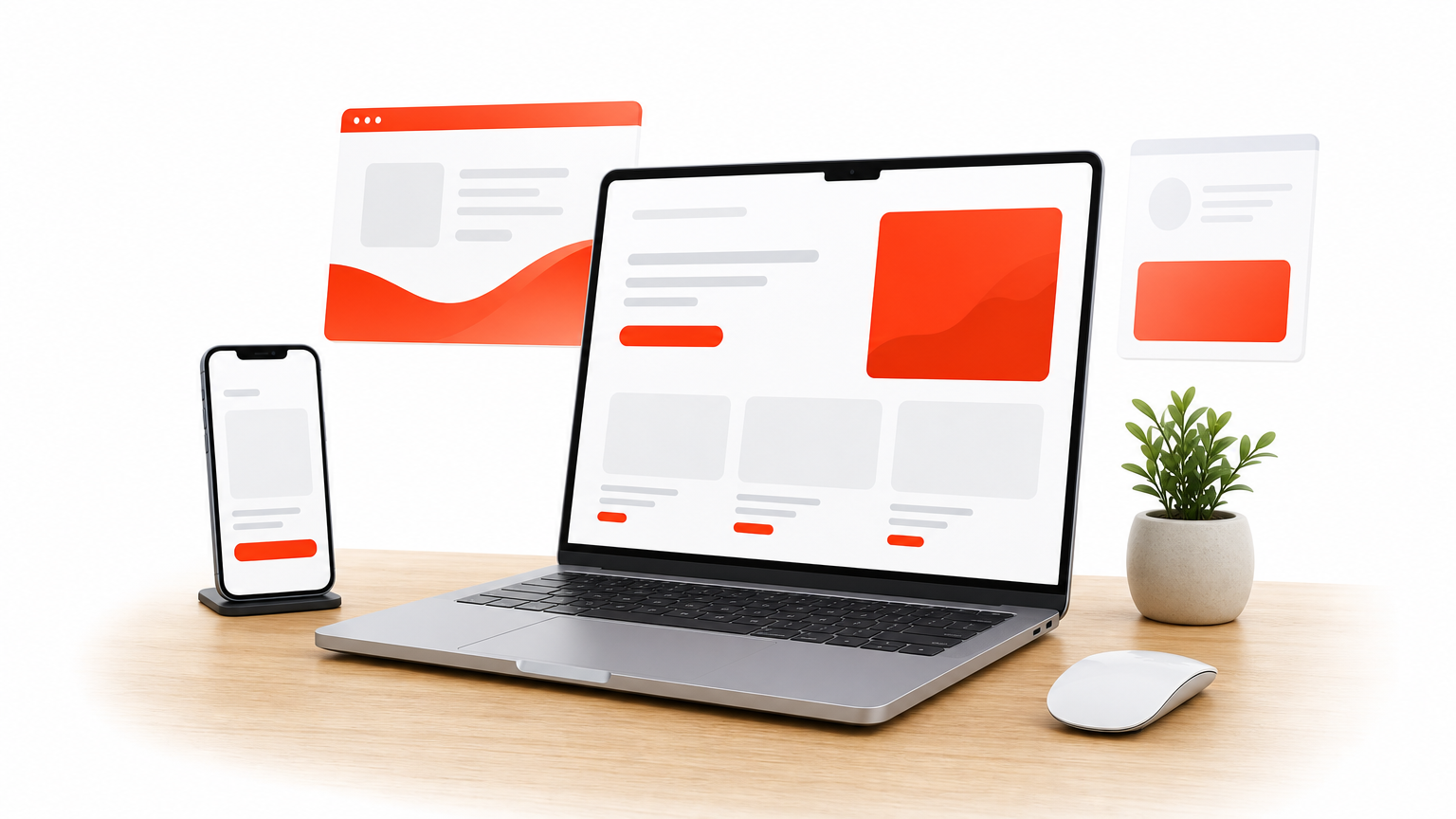
Webflow is the best source of app landing page templates if you want a custom look without writing code. Its template marketplace lists over 100 app landing page templates, with names such as Mindflow and Ovrion, all built in a visual editor.
What you get and what it costs
You clone a template into your Webflow account and edit it on the canvas. Layouts, spacing and interactions all live in the same visual editor, and the result is responsive by default. The marketplace mixes free and paid templates, so filter by price before you fall for a design.
- Format: Webflow project, edited visually
- Template cost: free or one-time paid, depending on the template
- Extra cost: a Webflow site plan is needed to publish on your own domain
Who it suits and what to watch
Webflow suits founders and designers who want polished animations and layout control without hiring a developer. It also suits teams that expect to add a blog or extra pages later, since the page grows with the site.
Watch the learning curve. The editor is powerful, and a first-time user needs a few hours to feel comfortable. Hosting is a recurring cost, and moving the page to another host later is harder than it is with plain HTML. Test the template on a phone before you commit, because most of your visitors will arrive from one.
Webflow gives you design control without code, but you pay for it with a monthly plan and a learning curve.
3. Figma Community landing page templates
Figma Community is the right place to look when you want to design the page before anyone builds it. It offers free, editable landing page templates you can duplicate into your own file and rework for your app.
What you get and what it costs
You get a design file, not a live page. Each template gives you frames for desktop and mobile, text styles and components, and you swap in your app icon, screenshots and copy. Most community files are free to duplicate, and you only need a Figma account.
- Format: Figma design file
- Cost: free for most files, plus your Figma account
- Output: a design you still have to build or hand off
Who it suits and what to watch
Figma files suit designers, product managers and founders who need to agree on messaging and layout before development starts. They are also handy for testing two headline and screenshot variations quickly with teammates.
The catch is the last mile. Someone has to convert the Figma design to WordPress or code it by hand, and that step takes real time. Check the license note on each file before you use it commercially. Skip the template if its fonts are not freely available to you, because a swapped font changes the whole look.
A Figma template speeds up the thinking, not the publishing.
4. UIdeck and GitHub free HTML templates
UIdeck and GitHub are the best free sources of app landing page templates if you can edit HTML. UIdeck offers 30+ free HTML templates built on Bootstrap and Tailwind, and GitHub hosts open projects such as the Mobile App Landing Page Template by sandoche.
What you get and what it costs
UIdeck templates are ready-to-edit HTML files with responsive layouts and common sections for mobile apps. The sandoche template on GitHub is built for a single purpose: it displays your app icon, shows unlimited app screenshots and links to Google Play. Both cost nothing to download.
- Format: HTML, CSS and JavaScript files, Bootstrap or Tailwind
- Cost: free, with license terms to read first
- Hosting: any static host, so running costs stay low
Who it suits and what to watch
These templates suit developers and technical founders who want full ownership of the code and almost no hosting cost. They also work well for a quick pre-launch page that you can ship in an afternoon.
Expect to do the work yourself. There is no visual editor, and nobody maintains the template for you. Read the license for commercial use, check when the files were last updated, and replace any demo images you do not have rights to. An outdated library can slow the page or trigger security warnings.
Free HTML templates cost nothing to download and a few hours to make your own.
5. Colorlib Bootstrap app templates
Colorlib is a good fit when you want a large, filterable catalog of mobile app landing page templates built on Bootstrap. Its app landing category lists around 50 templates with HTML5, CSS3 and JavaScript, and each one has a live preview.
What you get and what it costs
Each listing is tagged with who it is best for, such as mobile apps, SaaS products, app developers or startup launches. Appy and Appco are good places to start for mobile apps, and most templates use Bootstrap 5. Circles is a different case, built with Astro and Tailwind CSS and supporting dark mode. Older entries such as Raptor still use Bootstrap 4, so check the version.
- Format: HTML templates, mostly Bootstrap, some Astro and Tailwind
- Cost: check each template’s license and any credit-link requirement
- Preview: live demo for every listing
Who it suits and what to watch
Colorlib suits developers and agencies that want many options to compare in one place. The "best for" tags save time, because you can skip templates built for hosting companies or agencies.
Add tracking before launch. Put UTM parameters on your store links, for example utm_source=website&utm_campaign=landing_page, so you can see which traffic sources lead to installs. Also confirm the store buttons point to your real listings, not the demo placeholders.
A catalog with labels and previews saves you from downloading ten templates to find one.
6. ThemeForest premium app templates
ThemeForest is the pick when you are willing to pay for a polished template with support. It lists over 100 app landing page templates, sold individually, and you get more finished layouts than most free sources offer.
What you get and what it costs
You buy a template, download the files and customize them in your own environment, whether that is HTML, WordPress or another format. Templates are typically priced per item, and Envato Elements offers landing page templates in a subscription instead. Licenses matter here: a regular license covers a single end product, so a page for a client may need different terms.
- Format: HTML, WordPress themes and other types, depending on the listing
- Cost: one-time per item, or a subscription through Envato Elements
- Extras: author support and documentation, which vary by seller
Who it suits and what to watch
Premium templates suit teams that want a finished look quickly and prefer paying once over assembling pieces. They also suit agencies that value documentation and an author who answers questions.
Be selective. Heavy demos can drag down page speed, so remove the sliders and plugins you do not need. Look at the last update date, the ratings and what the buyer comments say before you pay. A beautiful demo with a slow mobile score will cost you installs.
Paying for a template makes sense only if you strip it down to the sections your app needs.
Choosing your template
Pick the source that matches how you build, not the one with the prettiest preview. Divihat suits Divi users, Webflow suits no-code builders, Figma suits design-first teams, UIdeck and GitHub suit coders, Colorlib suits Bootstrap fans, and ThemeForest suits buyers who want a premium finish.
Whatever you choose, keep the page simple: a clear headline, screenshots, proof and one download button, tested on a phone. If you build on WordPress, you can browse ready-made hero layouts for Divi and see whether one fits your app.